A busy database rarely fails because a server label was wrong. It fails when the underlying platform cannot provide predictable disk I/O, CPU time, memory, or network capacity when demand rises. That is why the bare metal versus VPS decision should begin with workload behavior, not a simple comparison of monthly prices.
Both options can run production websites, applications, databases, email platforms, and development environments. The practical difference is how much of the physical infrastructure you share, how much control you need, and how quickly capacity needs to change. A VPS is often the efficient starting point. A bare metal server is often the right answer when consistent performance and direct hardware access matter more than instant resizing.
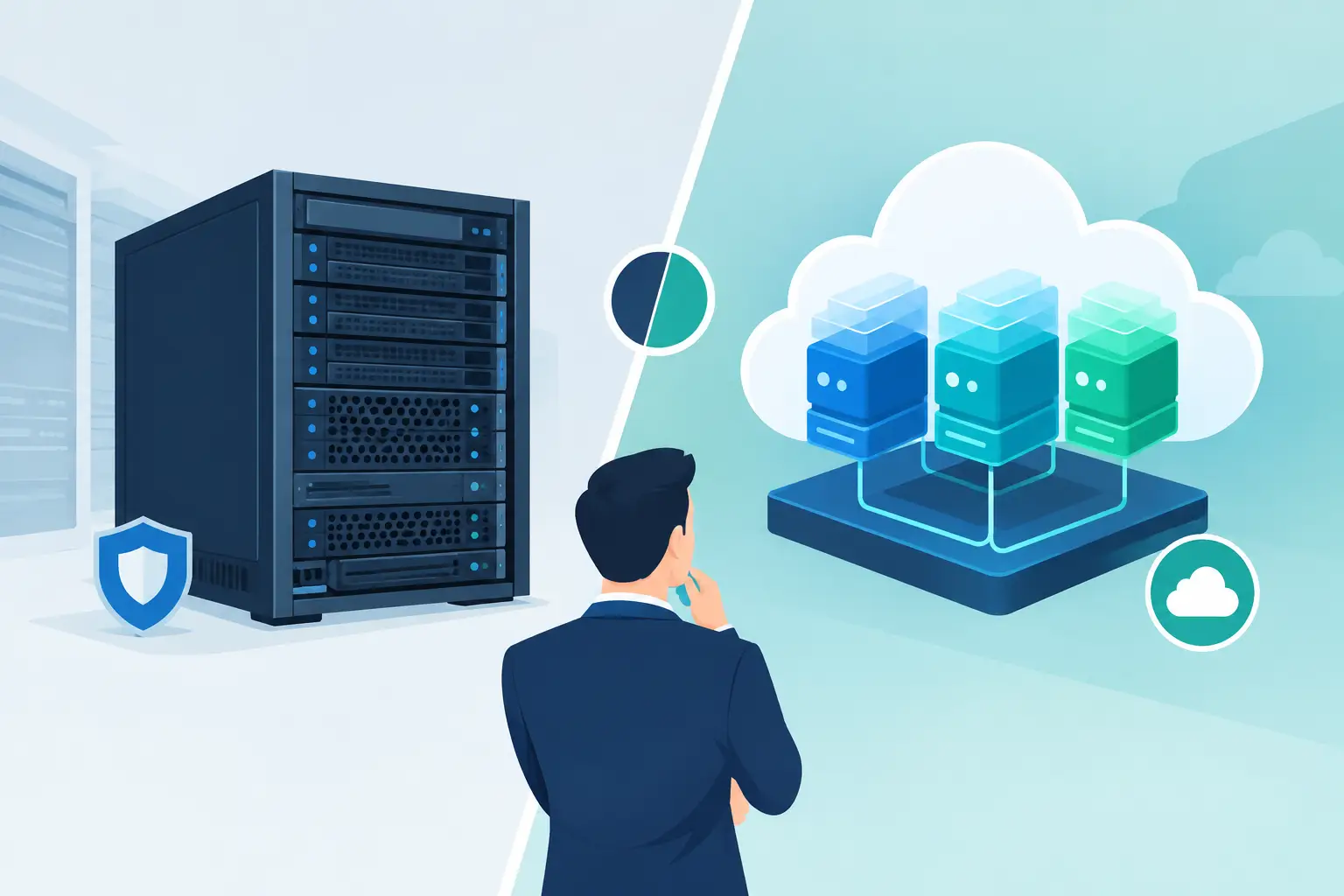
Bare Metal Versus VPS: The Core Difference
A VPS, or virtual private server, is a virtual machine running on a physical host alongside other virtual machines. Virtualization technology partitions compute, memory, storage, and networking so each VPS operates as an independent server with its own operating system and administrator access. With a well-designed KVM-based VPS platform, customers get strong isolation, defined resource allocations, and the flexibility to deploy or resize services without procuring a new physical server.
Bare metal is a dedicated physical server assigned to one customer. The CPU, RAM, local storage, and hardware configuration are not shared with other tenants. You control the server operating system and software stack, and you may have more freedom to tune storage, networking, kernel settings, and specialized applications.
Neither model is universally better. Virtualization is an advantage when agility, cost control, and efficient resource sizing are priorities. Dedicated hardware is an advantage when a workload needs sustained capacity with minimal infrastructure variability.
Performance: Consistency Matters More Than Peak Specs
A VPS can deliver excellent performance for most business workloads. A properly sized instance with guaranteed memory, fast storage, and sufficient CPU resources can run content management systems, agency hosting portfolios, APIs, internal tools, VPNs, and modest database workloads reliably. For many organizations, it provides more performance than they will actually use while keeping costs controlled.
The distinction becomes clearer under sustained load. A bare metal server has no hypervisor layer and no neighboring virtual machines competing for host-level CPU cycles, storage activity, or network paths. That makes performance more predictable, particularly for applications that are sensitive to latency or disk operations.
Database servers are a common example. An application may appear to have enough CPU and memory, yet still slow down during reporting jobs, backup windows, large imports, or periods of high transaction volume. Bare metal can provide more consistent I/O behavior for these cases, especially when paired with storage designed for the workload.
High-traffic ecommerce stores, media processing platforms, game servers, analytics jobs, and large search indexes may also benefit from dedicated hardware. The deciding factor is not simply traffic volume. A lightly visited application with an intensive database process may require more predictable infrastructure than a popular site serving mostly cached pages.
Cost and Capacity Planning
VPS hosting generally offers the lower entry cost because physical hardware is efficiently divided among multiple customers. It also allows organizations to pay for a more precise amount of CPU, memory, and storage. If an application grows from 4 GB to 16 GB of RAM, increasing a VPS plan may be simpler and less expensive than moving immediately to a larger server.
Bare metal has a higher baseline cost because the entire server is reserved. That expense can be justified when the business would otherwise need a large VPS configuration, several smaller instances, or repeated upgrades to handle a consistently demanding workload. At that point, dedicated hardware can offer favorable capacity per dollar, even if it is not the least expensive monthly option.
The operational cost matters as well. A VPS is usually easier to replace, clone, rebuild, and scale into multiple roles. A dedicated server may require more deliberate planning for upgrades, spare capacity, backup architecture, and failover. Organizations should include engineering time in their evaluation, not only infrastructure invoices.
Security and Isolation Requirements
A VPS provides logical isolation from other VPS customers. Modern hypervisors are designed to separate virtual machines, and a provider's data center controls, network design, patching practices, and monitoring procedures all contribute to the security of the service.
Bare metal provides physical single-tenant isolation. No other customer's operating system or application runs on the same server hardware. This can simplify risk assessments for certain regulated environments, sensitive data workloads, or customers with strict internal infrastructure requirements.
Physical isolation does not remove the need for good security practices. Both VPS and bare metal servers need timely operating system updates, firewall rules, strong credentials, encrypted backups, access controls, and active monitoring. A dedicated server with weak administration is less secure than a properly maintained VPS.
For organizations subject to payment, healthcare, or contractual security requirements, the infrastructure choice should be reviewed alongside the full compliance scope. The relevant question is whether the platform, operational processes, and application controls support the requirement, not whether one server type carries a more reassuring name.
Scaling: Vertical, Horizontal, and Practical Limits
VPS infrastructure is particularly useful when requirements are uncertain. Teams can start with a modest server, observe real resource usage, and increase capacity as traffic or application demand grows. This is vertical scaling: adding more RAM, CPU, or storage to an existing environment.
VPS platforms also support horizontal scaling well. Instead of building one oversized server, an application can separate web servers, databases, caching, background workers, and staging environments into independent instances. This structure can improve resilience and make it easier to scale individual components.
Bare metal scaling is more deliberate. Adding RAM or storage may be possible, but it depends on the selected hardware and available capacity. Moving to a more powerful server usually requires migration planning. That said, bare metal is not inflexible. It can be a strong foundation for stable, high-demand workloads that do not need frequent changes, and it can be combined with VPS resources for supporting services or burst capacity.
A hybrid approach is often sensible. For example, a company may run its primary database on dedicated hardware while using VPS instances for web applications, testing, monitoring, and administrative services. This places the most performance-sensitive function on predictable infrastructure without overprovisioning every part of the stack.
When a VPS Is the Better Fit
Choose a VPS when you need a cost-effective server that can adapt as requirements change. It is well suited to business websites, development and staging environments, smaller application stacks, customer portals, DNS services, VPNs, and general-purpose Linux or Windows workloads.
A VPS is also a strong option when fast provisioning and straightforward administration are important. Teams using Plesk, CyberPanel, or other control tools can manage websites and services without dedicating an entire physical server to workloads that do not require it.
Watch for signs that the VPS is being stretched beyond its intended role. Recurring CPU saturation, memory pressure, slow database queries during busy periods, storage latency, or a steady pattern of upgrades are reasons to reassess the architecture. The answer might be a larger VPS, a separate database server, or a move to bare metal.
When Bare Metal Is Worth It
Bare metal is usually the better fit for sustained high-resource workloads where predictable performance has business value. Consider it for large databases, intensive virtualization, high-volume transaction processing, data analysis, video encoding, private cloud components, and applications with strict resource isolation needs.
It is also appropriate when you need specific hardware characteristics, such as substantial RAM capacity, high-core-count processors, local NVMe storage, RAID configurations, or direct control over the operating environment. These requirements are difficult to express through a standard virtual server plan.
Internetport customers can evaluate dedicated servers alongside VPS capacity rather than treating the decision as permanent. Infrastructure should follow the workload as it matures, with room for planned migrations and a clear backup strategy before changes are made.
Make the Decision From Measured Demand
Before choosing, collect a baseline of CPU usage, memory utilization, disk latency, storage growth, network throughput, and application response times. Review peak periods, not just monthly averages. A server that looks lightly used at 2 a.m. may still be undersized during order processing, reporting, or campaign traffic.
Then ask what failure or slowdown would cost the business. If a few minutes of reduced performance are manageable, a scalable VPS may be the most sensible option. If performance fluctuations interrupt revenue, customer experience, or critical operations, dedicated hardware becomes easier to justify.
The best infrastructure choice is the one that gives your workload enough headroom without making routine operations harder than they need to be. Start with measured requirements, keep backups and recovery plans current, and select an environment that can grow at the same pace as the business relying on it.