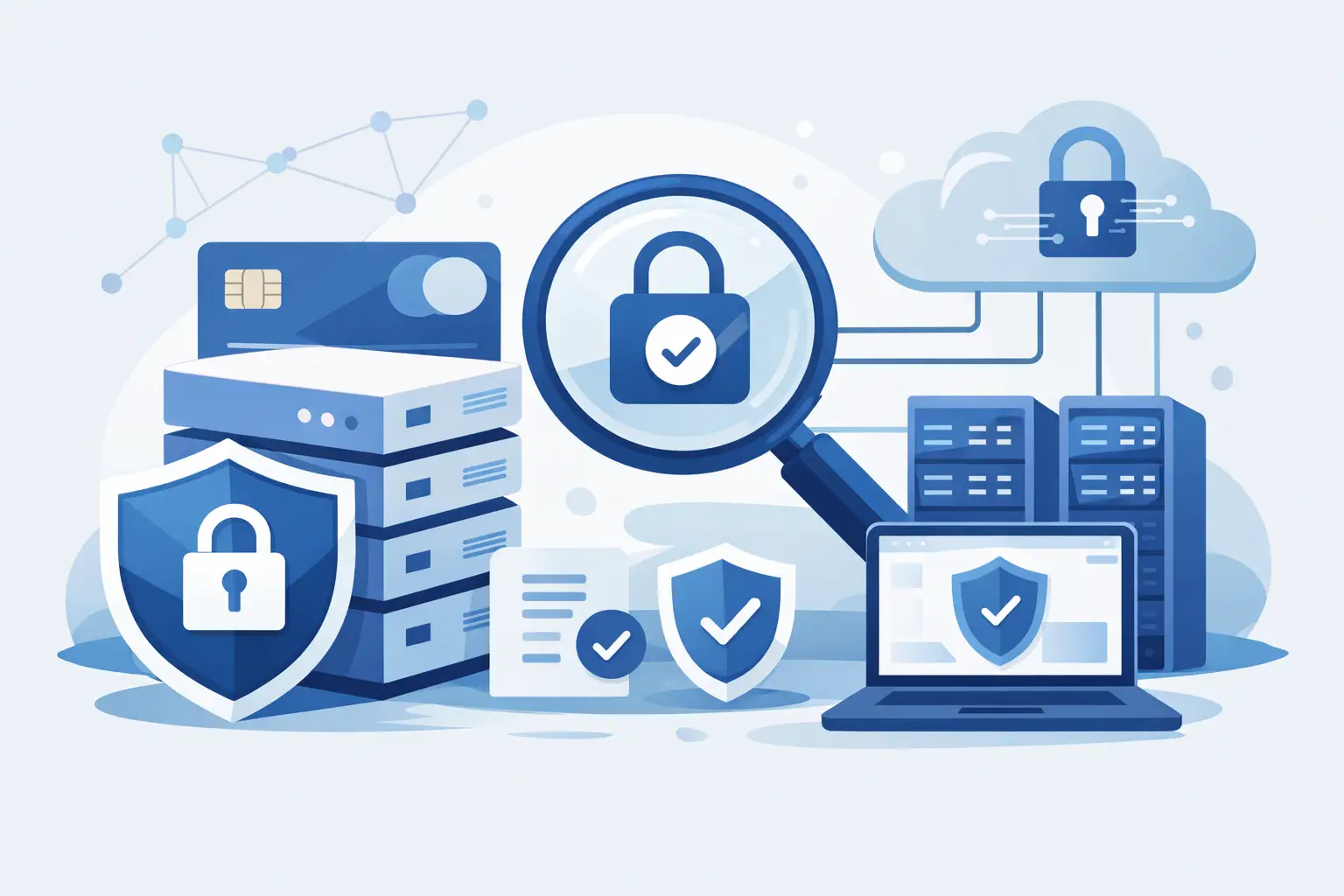
If your business accepts card payments online, the question is not just what is PCI DSS hosting - it is whether your hosting environment makes compliance easier or creates more audit work, risk, and cost. That distinction matters fast when you are handling checkout pages, payment applications, customer databases, or any system connected to cardholder data.
What is PCI DSS hosting?
PCI DSS hosting is hosting designed to support businesses that must meet the Payment Card Industry Data Security Standard, or PCI DSS. In plain terms, it means the infrastructure, security controls, and operational practices around your hosting environment are aligned with the requirements for protecting cardholder data.
That does not mean any provider can simply label a server as "PCI compliant" and transfer responsibility away from the customer. PCI DSS is a shared responsibility model. The hosting provider may secure the physical facility, network design, segmentation options, hardware standards, and some managed services. You are still responsible for your applications, user access, payment workflows, and how card data is stored, processed, or transmitted.
The practical value of PCI DSS hosting is that it gives you a better foundation. Instead of building every control from scratch in a generic environment, you start with infrastructure that is better suited for compliance work.
What PCI DSS actually covers
PCI DSS is a security framework created to protect payment card data. It applies to organizations that store, process, or transmit cardholder data, and in many cases to systems connected to that environment.
The standard focuses on areas such as access control, network security, logging, vulnerability management, encryption, monitoring, and physical security. For a hosting customer, that often translates into questions like these: Is the server isolated from other workloads? Are administrative actions logged? Is access limited to the right people? Are firewalls configured correctly? Is the data center physically secured? Are patches applied on time?
This is why PCI DSS hosting is not just about a server in a rack. It includes the full operational context around that server.
What makes hosting suitable for PCI DSS workloads?
A PCI-oriented hosting environment usually starts with secure infrastructure design. That can include dedicated servers, private cloud resources, segmented networks, controlled administrative access, encrypted connections, and centralized logging options. In many cases, businesses choose dedicated infrastructure because it reduces scope complications compared with multi-tenant setups.
Physical security also matters. PCI DSS pays close attention to facility controls, which is one reason data center standards are part of the conversation. A provider operating in PCI DSS-certified facilities can help support the physical and environmental side of compliance, including controlled access, surveillance, and documented procedures.
Then there is operational discipline. Secure hosting for PCI workloads often includes change tracking, vulnerability scanning support, backup strategy, patch management options, and incident response procedures. If you need evidence during an assessment, mature operations make a real difference.
PCI DSS hosting does not equal automatic compliance
This is where buyers often get tripped up. Hosting can support compliance, but it does not replace it.
For example, a provider may deliver a secure VPS or dedicated server in a certified data center, but if your application stores card numbers in plain text or your team shares admin logins, you still have a PCI DSS problem. The infrastructure may be sound, while the application layer fails the assessment.
The reverse can also happen. A well-built payment application can still be placed in an environment with weak segmentation, poor logging, or insufficient physical security. That creates another gap. PCI DSS hosting only works when the infrastructure and the customer’s own controls fit together.
Who typically needs PCI DSS hosting?
Any business that accepts, processes, transmits, or stores payment card data should evaluate whether its hosting environment is appropriate for PCI DSS requirements. That includes ecommerce stores, SaaS platforms with billing components, agencies managing payment-enabled websites, healthcare or membership portals with recurring payments, and businesses running private applications tied to card transactions.
Some companies can reduce their compliance scope by outsourcing payments to a third-party gateway with hosted checkout. In that case, PCI obligations may be smaller, but they rarely disappear completely. If your website touches the payment flow, loads checkout scripts, or handles customer account data tied to transactions, your hosting still matters.
For businesses with direct payment application hosting, the stakes are higher. They usually need tighter control over servers, network paths, access policies, and audit trails.
VPS, dedicated servers, and colocation - which is better?
It depends on your risk profile, compliance scope, and operational maturity.
A VPS can be suitable if the provider offers strong isolation, network controls, and a clear security model, and if your PCI scope is limited. This can be a cost-effective path for smaller businesses that need predictable hosting without going straight to bare metal.
Dedicated servers are often the cleaner option for PCI-sensitive workloads. They offer stronger tenancy separation, more control over configurations, and fewer gray areas during assessments. For organizations with custom applications, databases, or stricter internal policies, dedicated infrastructure is often easier to justify.
Colocation makes sense when your team wants full hardware control while placing systems in a compliant facility with redundant power, cooling, and connectivity. This is common for larger organizations or those with established security processes that want physical ownership without running their own data center.
There is no universal winner. The right answer depends on how much of the stack you want to manage, how much compliance evidence you need to produce, and whether your goal is minimum viable scope or long-term operational control.
What to ask a hosting provider
If you are evaluating providers, ask practical questions instead of chasing broad marketing claims. You want to know whether the environment can support your audit process, not just whether it sounds secure.
Start with the facility. Ask whether the data center supports PCI DSS requirements and what documentation is available. Then move to the infrastructure layer: network segmentation, firewall options, access controls, logging support, backup design, and whether managed patching or monitoring is available.
You should also ask where provider responsibility ends. A dependable provider will be clear about the shared responsibility model. That is usually a good sign. Vague answers are not.
For many buyers, this is where an infrastructure-focused provider has an advantage. Companies like Internetport that offer dedicated servers, VPS, colocation, and direct data center capabilities can often match the hosting model to the actual compliance scope instead of forcing every workload into the same template.
Common mistakes when planning PCI DSS hosting
One common mistake is assuming the cheapest hosting plan will be good enough if SSL is enabled. Encryption in transit is only one piece of the standard. PCI DSS also expects control around access, monitoring, system hardening, and incident handling.
Another mistake is keeping the cardholder data environment larger than it needs to be. If your web server, admin tools, database, and internal office systems are all mixed together, compliance gets harder and more expensive. Segmentation can reduce both risk and audit complexity.
A third mistake is overlooking supportability. A compliant design on paper is not very useful if your team cannot patch systems consistently, review logs, or recover cleanly after a fault. Hosting should fit your operational reality, not just your security checklist.
Why PCI DSS hosting matters beyond the audit
Passing an assessment is one reason to care about PCI DSS hosting, but it is not the only one. Card data environments are attractive targets, and weak infrastructure tends to fail in familiar ways: exposed services, stale software, broad admin access, and poor visibility when something goes wrong.
Better hosting reduces the chance that a routine issue turns into a security incident. It can also save time during audits because the underlying controls, documentation, and environment design are already more structured. For growing businesses, that matters. Compliance friction has a way of increasing right when transaction volume and customer expectations are rising.
The best PCI DSS hosting setup is not the one with the longest feature list. It is the one that matches your payment architecture, limits unnecessary scope, and gives your team a stable, well-managed base for meeting the standard without overbuilding. If you are handling card data, that is not extra polish. It is part of running payment infrastructure responsibly.